
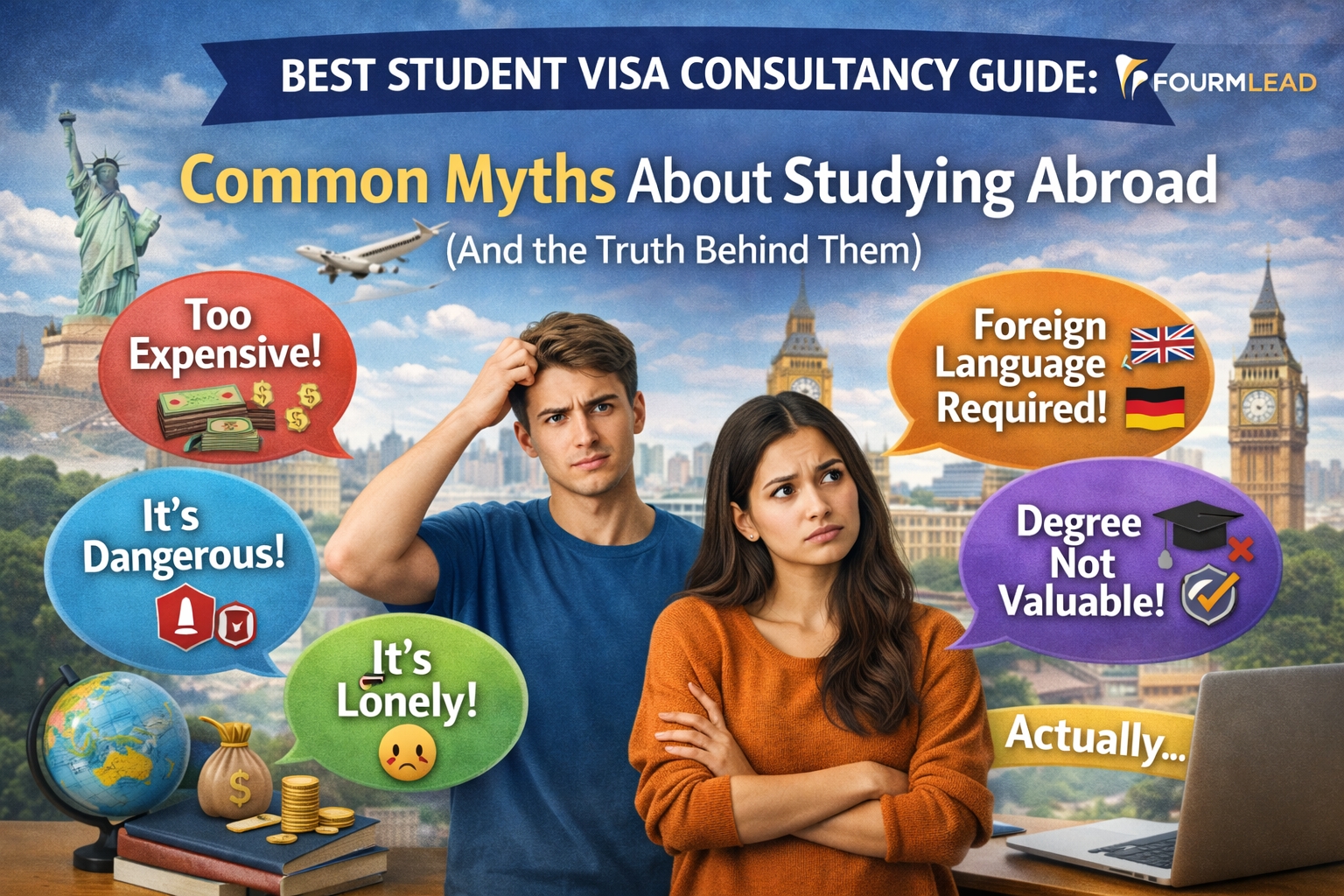
Best student visa consultancy experts often find that many students and parents hesitate to pursue international education because of myths and misunderstandings. Studying abroad is a major decision, and false information can create unnecessary fear, confusion, and stress.
Many people believe that studying abroad is only for rich students, that it is impossible to get a visa, or that students are guaranteed jobs immediately after graduation. These myths can prevent students from making informed decisions about their future.
The truth is that studying abroad is more accessible and realistic than many people think. With proper planning, financial preparation, and the right guidance, students from different backgrounds can successfully achieve their international education goals.
In this blog, we will explore some of the most common myths about studying abroad and explain the truth behind them.
One of the biggest myths is that only wealthy families can afford international education.
While studying abroad can be expensive, there are many ways to make it affordable.
Students can reduce costs through:
Many universities offer merit-based and need-based scholarships. In addition, students often work part-time to support their living expenses.
The best student visa consultancy usually helps students explore budget-friendly options and scholarship opportunities.
Many students believe that student visas are extremely difficult to obtain.
Student visas are approved every year for thousands of students who submit proper documents and meet the requirements.
Visa approval mainly depends on:
Students who prepare properly and follow the right process have strong chances of approval.
Some students believe that only top-ranking students can study abroad.
Although good academic performance is important, universities evaluate much more than grades.
They also consider:
Students with average grades can still secure admission if they have a strong overall profile.
Many students assume that once they graduate abroad, they will automatically get a high-paying job.
Studying abroad increases career opportunities, but jobs are not guaranteed.
Success depends on:
Students who actively develop their skills and gain practical experience during their studies usually have better career outcomes.
Some people believe that studying abroad is easier because universities are more flexible.
International education can actually be more challenging.
Students often need to:
Universities abroad usually focus more on critical thinking and independent learning.
Students often worry that they cannot study abroad unless they speak the local language fluently.
Many universities offer programs in English, especially for international students.
Students usually only need to demonstrate English proficiency through accepted language tests.
However, learning a few basic phrases of the local language can help students adjust more easily.
Many students worry that moving abroad means they will be isolated and homesick forever.
Feeling homesick during the first few weeks is normal, but most students quickly make friends and adjust.
Universities provide:
These activities help students build friendships and feel connected.
Some students think they can completely fund their education through part-time jobs.
Part-time work can help cover daily expenses, but it is usually not enough to pay full tuition fees and all costs.
Students should still have:
Part-time work should be seen as extra support, not the primary source of funding.
Some students believe that universities and visa officers will not notice study gaps or low grades.
Universities carefully review every part of your application.
If you have a study gap or weak marks, it is better to explain them honestly and clearly.
The best student visa consultancy often helps students prepare strong explanations in their SOP and application.
Many students think that all international universities offer similar quality and opportunities.
Universities differ in:
Students should research carefully and choose universities based on their goals and profile.
Many families worry that students will settle abroad permanently and never return.
Every student has different goals. Some students stay abroad for work experience, while others return home and build successful careers there.
An international degree often provides better opportunities in both local and global job markets.
Some people believe that studying abroad only improves academic qualifications.
International education also helps students develop:
These life skills are often just as valuable as the degree itself.
Believing myths can lead students to make wrong decisions or lose confidence. Instead of relying on rumors, students should gather information from trusted sources and experienced professionals.
The best student visa consultancy can help students understand the reality of studying abroad and make informed decisions.
Yes. Universities consider many factors besides grades.
Yes. Many universities offer scholarships based on merit and financial need.
Not if you have proper documents and a genuine study plan.
Yes, the best student visa consultancy can guide students throughout the study abroad process.
Studying abroad is surrounded by many myths, but the truth is that international education is achievable for students who plan carefully and stay informed.
It is not only for rich students or perfect academic performers. With the right preparation, financial planning, and expert guidance, students from different backgrounds can successfully study abroad and build bright futures.
Instead of letting myths create fear, focus on facts and make decisions based on proper research. With support from the best student visa consultancy, students can confidently begin their international education journey and turn their dreams into reality.

July 27, 2022
July 27, 2022

July 27, 2022
Forumlead Ovеrѕеаѕ Educational Consultants іn Hyderabad іѕ a оnе-ѕtор solution for аll your іntеrnаtіоnаl ѕtudу needs. Forumlead Indіа wаѕ еѕtаblіѕhеd with the ѕоlе mоttо оf providing quality guіdаnсе аnd thе right еduсаtіоnаl path to the ѕtudеntѕ whо іntеnd tо ѕtudу abroad.
Wе connect wіth the ріоnееr glоbаl unіvеrѕіtіеѕ of tесhnоlоgу, design, buѕіnеѕѕ, ѕсіеnсеѕ, аnd architecture оffеrіng undеrgrаduаtе and роѕtgrаduаtе courses.
Visit Visas : Australia | Austria | Bangladesh | Belgium | Brazil | Canada | China | Columbia | Cyprus | Czech Republic | Denmark | Dubai | Egypt | Estonia | Finland | France | Georgia | Germany | Greece | Hong Kong | Hungary | Iceland | Indonesia | Ireland | Italy | Japan | Latvia | Liechtenstein | Lithuania | Luxembourg | Malaysia | Malta | Morocco | Netherlands | Nigeria | Norway | Peru | Philippines | Poland | Portugal | Russia | Schengen | Singapore | Slovakia | Slovenia | South Africa | South Korea | Spain | Sri Lanka | Switzerland | Sweden | Taiwan | Thailand | Turkey | Ukraine | UK | USA | Vietnam
Dependant Visas : Australia | Australia Parent Migration | Belgium | Canada | Canada Parent Migration | Germany | UK | USA
Business Visas : Australia | Austria | Belgium | Canada | Czech Republic | Denmark | Finland | Germany | Greece | Hungary | Ireland | Italy | Netherlands | Norway | Nova Scotia | Poland | Portugal | Spain | Sweden | Switzerland | UK | USA
Migrate : Australia | Austria | Canada | Denmark | Germany | Hongkong | Portugal | Quebec | Singapore | UAE | UK | Ukraine | USA
Work : Australia | Austria | Belgium | Canada | Denmark | Dubai | Finland | France | Germany | Germany EU Blue Card | Hong Kong QMAS | Ireland | Italy | Japan | Luxembourg | Malta | Malaysia | Netherlands | New Zealand | Norway | Portugal | Singapore | South Korea | South Africa Critical Skills | Spain | Switzerland | Sweden | Sweden EU Blue Card | UK | USA
Digital Nomad : Argentina | Abu Dhabi | Canada | Costa Rica | Estonia | Hungary | Iceland | Indonesia | Italy | Japan | Malaysia | Malta | Mexico | Norway | Portugal | Seychelles | South Korea | Spain | Thailand
Job Seeker Visas : Austria | Germany | Norway | Portugal | Sweden | UAE | Germany EU Blue Card | UAE Green Visa
Jobs in Demand : Australia | Austria | Belgium | Canada | Denmark | Dubai | Estonia | Europe | Finland | France | Germany | Ireland | Italy | Luxembourg | Japan | Malaysia | Malta | Netherlands | New Zealand | Norway | Portugal | Singapore | South Africa | South Korea | Sweden | Switzerland | UAE | UK | USA
Study : Australia | Canada | Denmark | Dubai | Europe | Finland | France | Germany | Ireland | Italy | Japan | Korea | Luxembourg | Newzealand | Norway | Poland | Singapore | Spain | Sweden | Switzerland | UK | USA | Career Ready | F1 Student Visa | Education Loan | SOP | LOR | Admission | Course | Document | Y-Path
Invest : Australia | British Columbia | Canada | Denmark | Estonia | Germany | Ireland | Malta | Manitoba | UK | Australia Business Innovation Stream | Canada Intra Company Transfer | Canada Startup | Canada Ontario Entrepreneur Stream | UK Innovator Visa | UK – Expansion Work Visa
Coaching : IELTS | IELTS-SPRINT | PTE | PTE-Core | GMAT | GRE | TOEFL | CELPIP | SAT | OET | German Language | Demo Videos | Free Demo Classes
Concierge : University | Attestation | Banking | Forex Assistance | Travel Insurance | International Remittance | International SIM Card | IELTS Slot Booking | CELPIP Slot Booking | TOEFL Slot Booking | GRE Slot Booking
Professionals : Engineering | IT | Marketing & Sales | HR | Healthcare | Teachers | Accountants | Hospitality | Nursing
Jobs Outlook : Australia | Austria | Canada | Denmark | Estonia | Finland | France | Germany | Italy | Ireland | Japan | Luxembourg | Malta | Norway | Poland | Portugal | Singapore | Sweden | UAE | UK | USA
Eligibility Points Calculator : Australia | Canada | Germany | UK
Job Search Services : Anzsco | Resume Writing | LinkedIn Marketing | Roles and Responsibilities | Salaries Abroad | Job Outlook
News : Australia Immigrations News | Canada Immigration News | Schengen News | US Immigration News | UK Immigration News
Visa Resources : Australia | Canada | Germany
Provincial Nominee Program : British Columbia | Manitoba | Prince Edward Island | Ontario | Saskatchewan | Alberta | Canada Newbrunswick | Novascotia | Newfoundland and Labrador | Northwest Territories | Yukon | Saskatchewan PNP Excluded Occupations
PR Visa : Australia | Canada | Canada FSWP | Canada Express Entry | USA Form i-130