
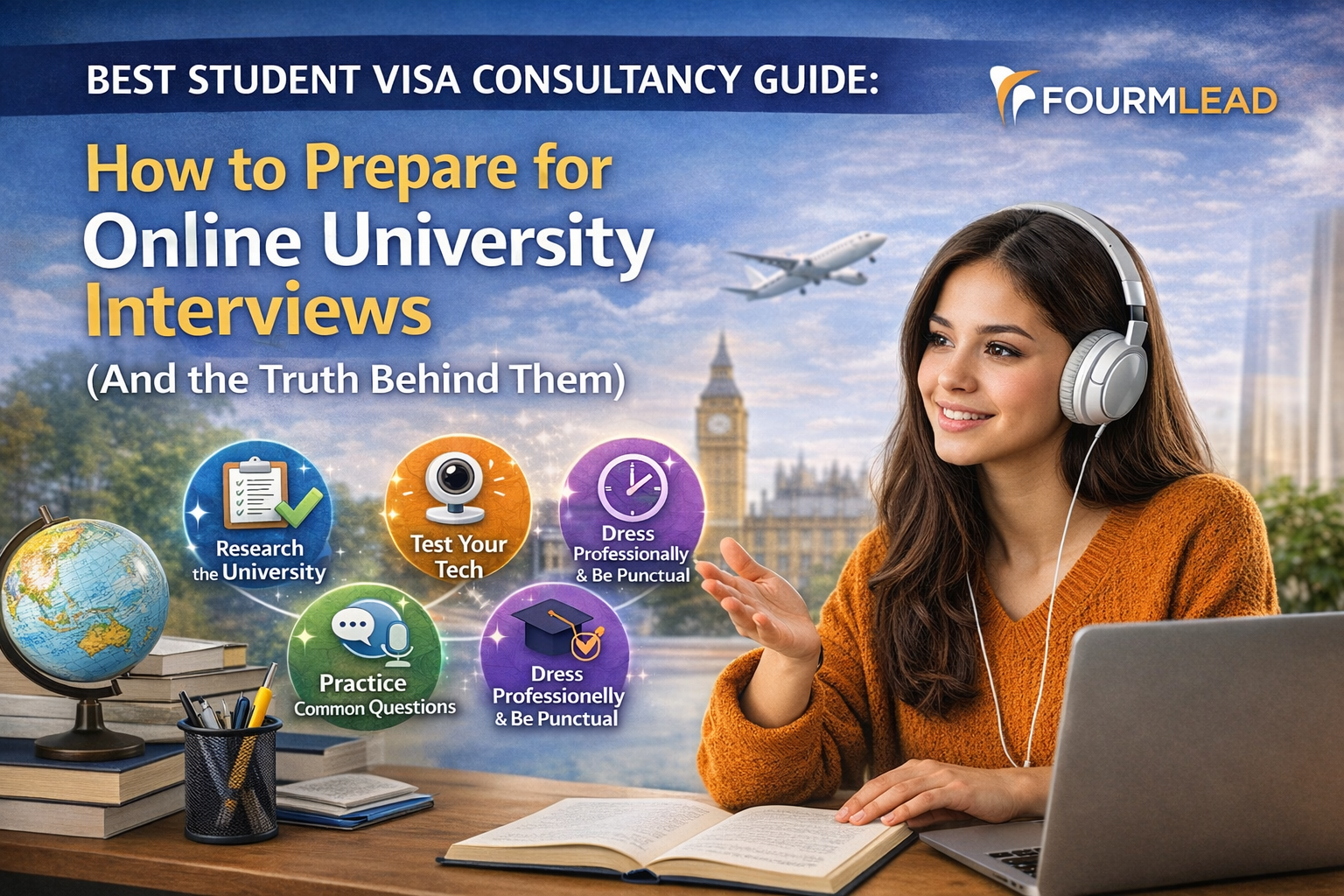
Best student visa consultancy experts often explain that online university interviews have become an important step in the study abroad admission process. Many international universities conduct interviews to understand a student’s personality, academic goals, communication skills, and motivation for choosing a particular course.
For many students, the idea of speaking to university representatives online can feel stressful. They worry about technical problems, difficult questions, or feeling nervous during the interview. However, with proper preparation, students can perform confidently and make a strong impression.
Online university interviews are not designed to scare students. Universities simply want to know whether you are genuinely interested in the course, whether your goals match the program, and whether you are prepared for international education.
In this detailed guide, we will explain how to prepare for online university interviews and increase your chances of success.
Universities use interviews to understand students beyond their grades and documents.
They want to know:
Even if your application is strong, a poor interview can reduce your chances of admission. On the other hand, a confident and well-prepared interview can strengthen your application significantly.
Students often work with the best student visa consultancy to practice interviews and improve their confidence before the final discussion.
Before preparing answers, it is important to understand what the university wants to learn about you.
Universities generally evaluate:
They are not expecting perfect answers. They simply want honest, clear, and thoughtful responses.
One of the biggest mistakes students make is attending an interview without proper knowledge about the university or course.
Before your interview, research:
You should be able to explain clearly why you chose that university and why the course is right for you.
For example, instead of saying:
“I chose this university because it is popular.”
You should say:
“I chose this university because its program focuses on practical learning and offers strong internship opportunities in my field.”
This shows that you have done your research and are serious about your decision.
Most university interviews include similar types of questions. Preparing in advance will help you answer more confidently.
Write down your answers and practice them several times.
This is usually the first question and creates the first impression.
Your answer should include:
“My name is Sarah, and I recently completed my undergraduate studies in business. I have always been interested in marketing and communication, which is why I want to pursue further studies in this field. I believe this course will help me gain practical skills and achieve my goal of building an international career.”
Keep your answer short, clear, and relevant.
Universities want to know whether you have a clear plan for your future.
You should explain:
Students who can connect their past experiences with future goals usually leave a stronger impression.
The best student visa consultancy often helps students prepare career-focused answers that sound more confident and professional.
Many students know the answers but struggle because of nervousness.
To improve confidence:
Do not try to memorize every answer exactly. Instead, understand the key points and speak naturally.
Remember, confidence is more important than perfection.
Since the interview is online, technical preparation is very important.
Before the interview, check:
Technical problems can create stress and interrupt the conversation, so test everything in advance.
Even though the interview is online, your appearance matters.
Students should wear:
Dressing professionally helps create a good impression and also boosts confidence.
Your interview environment should be:
Avoid noisy places or backgrounds that may distract the interviewer.
Sit in a comfortable place where your face is clearly visible.
Body language is just as important online as it is in face-to-face interviews.
Good body language includes:
These small details make you appear more confident and professional.
Feeling nervous is normal. Almost every student experiences it.
Here are some ways to stay calm:
Do not panic if you make a small mistake. Stay calm and continue speaking.
At the end of the interview, universities often ask if you have any questions.
You can ask:
Asking thoughtful questions shows genuine interest.
Many students make simple mistakes that reduce their chances of success.
Avoid:
Preparing well helps avoid these mistakes.
Students who prepare properly often experience:
A good interview can sometimes make the difference between acceptance and rejection.
Online interviews can be difficult, especially for students who have never faced one before.
The best student visa consultancy helps students:
Professional guidance makes students feel more prepared and comfortable.
They can feel challenging at first, but proper preparation makes them much easier.
Most interviews last between 15 and 30 minutes.
Wear formal or semi-formal clothes that look professional.
You may keep small notes nearby, but avoid reading directly from them.
Yes, the best student visa consultancy often provides mock interview practice and expert guidance.
Online university interviews are an important part of the study abroad process, but they do not need to be stressful. With proper research, practice, and preparation, students can answer confidently and make a positive impression.
Focus on understanding your course, explaining your goals clearly, and presenting yourself professionally. Confidence, honesty, and preparation are the keys to success.
With support from the best student visa consultancy, students can prepare effectively, perform well in interviews, and move one step closer to achieving their dream of studying abroad.

July 27, 2022
July 27, 2022

July 27, 2022
Forumlead Ovеrѕеаѕ Educational Consultants іn Hyderabad іѕ a оnе-ѕtор solution for аll your іntеrnаtіоnаl ѕtudу needs. Forumlead Indіа wаѕ еѕtаblіѕhеd with the ѕоlе mоttо оf providing quality guіdаnсе аnd thе right еduсаtіоnаl path to the ѕtudеntѕ whо іntеnd tо ѕtudу abroad.
Wе connect wіth the ріоnееr glоbаl unіvеrѕіtіеѕ of tесhnоlоgу, design, buѕіnеѕѕ, ѕсіеnсеѕ, аnd architecture оffеrіng undеrgrаduаtе and роѕtgrаduаtе courses.
Visit Visas : Australia | Austria | Bangladesh | Belgium | Brazil | Canada | China | Columbia | Cyprus | Czech Republic | Denmark | Dubai | Egypt | Estonia | Finland | France | Georgia | Germany | Greece | Hong Kong | Hungary | Iceland | Indonesia | Ireland | Italy | Japan | Latvia | Liechtenstein | Lithuania | Luxembourg | Malaysia | Malta | Morocco | Netherlands | Nigeria | Norway | Peru | Philippines | Poland | Portugal | Russia | Schengen | Singapore | Slovakia | Slovenia | South Africa | South Korea | Spain | Sri Lanka | Switzerland | Sweden | Taiwan | Thailand | Turkey | Ukraine | UK | USA | Vietnam
Dependant Visas : Australia | Australia Parent Migration | Belgium | Canada | Canada Parent Migration | Germany | UK | USA
Business Visas : Australia | Austria | Belgium | Canada | Czech Republic | Denmark | Finland | Germany | Greece | Hungary | Ireland | Italy | Netherlands | Norway | Nova Scotia | Poland | Portugal | Spain | Sweden | Switzerland | UK | USA
Migrate : Australia | Austria | Canada | Denmark | Germany | Hongkong | Portugal | Quebec | Singapore | UAE | UK | Ukraine | USA
Work : Australia | Austria | Belgium | Canada | Denmark | Dubai | Finland | France | Germany | Germany EU Blue Card | Hong Kong QMAS | Ireland | Italy | Japan | Luxembourg | Malta | Malaysia | Netherlands | New Zealand | Norway | Portugal | Singapore | South Korea | South Africa Critical Skills | Spain | Switzerland | Sweden | Sweden EU Blue Card | UK | USA
Digital Nomad : Argentina | Abu Dhabi | Canada | Costa Rica | Estonia | Hungary | Iceland | Indonesia | Italy | Japan | Malaysia | Malta | Mexico | Norway | Portugal | Seychelles | South Korea | Spain | Thailand
Job Seeker Visas : Austria | Germany | Norway | Portugal | Sweden | UAE | Germany EU Blue Card | UAE Green Visa
Jobs in Demand : Australia | Austria | Belgium | Canada | Denmark | Dubai | Estonia | Europe | Finland | France | Germany | Ireland | Italy | Luxembourg | Japan | Malaysia | Malta | Netherlands | New Zealand | Norway | Portugal | Singapore | South Africa | South Korea | Sweden | Switzerland | UAE | UK | USA
Study : Australia | Canada | Denmark | Dubai | Europe | Finland | France | Germany | Ireland | Italy | Japan | Korea | Luxembourg | Newzealand | Norway | Poland | Singapore | Spain | Sweden | Switzerland | UK | USA | Career Ready | F1 Student Visa | Education Loan | SOP | LOR | Admission | Course | Document | Y-Path
Invest : Australia | British Columbia | Canada | Denmark | Estonia | Germany | Ireland | Malta | Manitoba | UK | Australia Business Innovation Stream | Canada Intra Company Transfer | Canada Startup | Canada Ontario Entrepreneur Stream | UK Innovator Visa | UK – Expansion Work Visa
Coaching : IELTS | IELTS-SPRINT | PTE | PTE-Core | GMAT | GRE | TOEFL | CELPIP | SAT | OET | German Language | Demo Videos | Free Demo Classes
Concierge : University | Attestation | Banking | Forex Assistance | Travel Insurance | International Remittance | International SIM Card | IELTS Slot Booking | CELPIP Slot Booking | TOEFL Slot Booking | GRE Slot Booking
Professionals : Engineering | IT | Marketing & Sales | HR | Healthcare | Teachers | Accountants | Hospitality | Nursing
Jobs Outlook : Australia | Austria | Canada | Denmark | Estonia | Finland | France | Germany | Italy | Ireland | Japan | Luxembourg | Malta | Norway | Poland | Portugal | Singapore | Sweden | UAE | UK | USA
Eligibility Points Calculator : Australia | Canada | Germany | UK
Job Search Services : Anzsco | Resume Writing | LinkedIn Marketing | Roles and Responsibilities | Salaries Abroad | Job Outlook
News : Australia Immigrations News | Canada Immigration News | Schengen News | US Immigration News | UK Immigration News
Visa Resources : Australia | Canada | Germany
Provincial Nominee Program : British Columbia | Manitoba | Prince Edward Island | Ontario | Saskatchewan | Alberta | Canada Newbrunswick | Novascotia | Newfoundland and Labrador | Northwest Territories | Yukon | Saskatchewan PNP Excluded Occupations
PR Visa : Australia | Canada | Canada FSWP | Canada Express Entry | USA Form i-130