
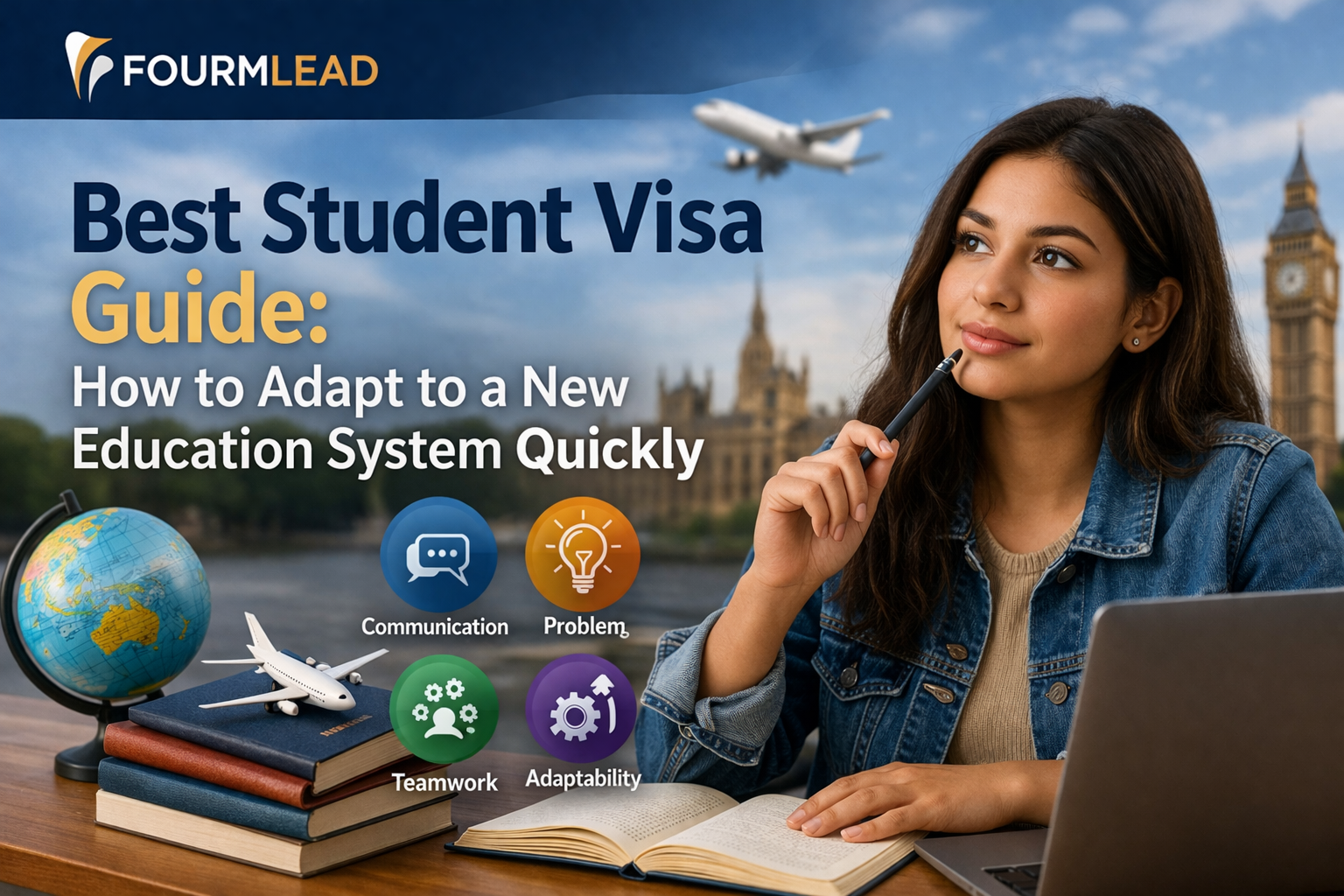
Best student visa consultancy experts often explain that one of the biggest challenges international students face is adapting to a new education system. Getting admission and a visa is only the beginning of the study abroad journey. Once students arrive in a new country, they often realize that the way universities teach, assess, and communicate is very different from what they are used to.
For many students, the first few weeks can feel confusing. New classroom rules, independent study, group discussions, assignments, and academic expectations may seem overwhelming. However, with the right preparation and approach, students can adapt quickly and perform successfully.
In this guide, we will explore practical strategies that help students adjust to a new education system and build confidence during their study abroad journey.
Every country and university follows a different academic structure. Students who are used to one style of learning may find it difficult to adjust to another.
Common differences include:
Students who understand these changes early can adjust more easily.
Many students seek guidance from the best student visa consultancy before departure to understand what academic life will be like.
The first step to adapting quickly is understanding how classes are conducted.
In many international universities, students are expected to:
Teachers often encourage students to think independently instead of simply memorizing information.
This can be unfamiliar at first, but active participation is usually expected and appreciated.
Different universities use different methods to evaluate students.
Your final grade may depend on:
Unlike traditional systems where final exams carry most of the marks, many international universities assess students continuously throughout the semester.
Understanding this system early helps students plan better and avoid surprises.
One of the biggest challenges international students face is managing time effectively.
Students often need to balance:
Good time management helps students stay organized and reduce stress.
Students who manage their time well adapt faster to their new education system.
International universities often expect students to study independently outside the classroom.
This means students should:
Teachers may not provide all the information directly. Instead, students are expected to explore topics on their own.
This style of learning helps students become more responsible and self-disciplined.
Many students hesitate to speak in class because they feel nervous or unsure. However, participation is an important part of learning.
Students should try to:
Speaking in class improves confidence and helps teachers understand your interest in the subject.
The best student visa consultancy often advises students to prepare mentally for this interactive style of learning.
Good communication is essential for academic success.
Students need strong communication skills for:
Students who struggle with language or confidence should practice speaking and writing regularly before starting their studies abroad.
Professors can provide valuable academic guidance and support.
Students should:
Building a good relationship with professors can improve learning and create future opportunities.
Most universities provide support services specifically for international students.
These may include:
Students should not hesitate to use these resources if they need help.
Group work is common in international universities. Students often have to work with classmates from different cultures and backgrounds.
Successful teamwork requires:
Group projects help students develop leadership and teamwork skills.
Classroom culture may be very different from what students are used to.
For example:
Understanding these cultural differences helps students feel more comfortable and confident.
Even with preparation, many students experience challenges during the first semester.
Common issues include:
These challenges are normal and become easier with time and practice.
Every student is different, but most students begin to feel comfortable within the first few months.
Students who are open-minded, organized, and willing to learn usually adapt faster.
Patience is important. It takes time to become familiar with a new environment.
Students who adjust quickly experience several benefits:
Adapting early allows students to make the most of their international education experience.
Preparing for a new education system can feel overwhelming, especially for first-time international students.
The best student visa consultancy helps students:
This guidance helps students start their journey more smoothly.
Because teaching methods, classroom expectations, and grading systems are often very different.
Practice speaking, ask questions, and participate in small discussions.
Yes, group projects are common and help students develop teamwork and communication skills.
Yes, the best student visa consultancy can guide students about academic expectations before they travel.
Adapting to a new education system is one of the biggest steps in the study abroad journey. Although the first few weeks may feel challenging, students who stay open-minded, organized, and proactive can adjust successfully.
Understanding the teaching style, managing time, participating in class, and building good study habits are essential for success.
With the right mindset and support from the best student visa consultancy, students can quickly adapt to their new academic environment and enjoy a successful international education experience.

July 27, 2022
July 27, 2022

July 27, 2022
Forumlead Ovеrѕеаѕ Educational Consultants іn Hyderabad іѕ a оnе-ѕtор solution for аll your іntеrnаtіоnаl ѕtudу needs. Forumlead Indіа wаѕ еѕtаblіѕhеd with the ѕоlе mоttо оf providing quality guіdаnсе аnd thе right еduсаtіоnаl path to the ѕtudеntѕ whо іntеnd tо ѕtudу abroad.
Wе connect wіth the ріоnееr glоbаl unіvеrѕіtіеѕ of tесhnоlоgу, design, buѕіnеѕѕ, ѕсіеnсеѕ, аnd architecture оffеrіng undеrgrаduаtе and роѕtgrаduаtе courses.
Visit Visas : Australia | Austria | Bangladesh | Belgium | Brazil | Canada | China | Columbia | Cyprus | Czech Republic | Denmark | Dubai | Egypt | Estonia | Finland | France | Georgia | Germany | Greece | Hong Kong | Hungary | Iceland | Indonesia | Ireland | Italy | Japan | Latvia | Liechtenstein | Lithuania | Luxembourg | Malaysia | Malta | Morocco | Netherlands | Nigeria | Norway | Peru | Philippines | Poland | Portugal | Russia | Schengen | Singapore | Slovakia | Slovenia | South Africa | South Korea | Spain | Sri Lanka | Switzerland | Sweden | Taiwan | Thailand | Turkey | Ukraine | UK | USA | Vietnam
Dependant Visas : Australia | Australia Parent Migration | Belgium | Canada | Canada Parent Migration | Germany | UK | USA
Business Visas : Australia | Austria | Belgium | Canada | Czech Republic | Denmark | Finland | Germany | Greece | Hungary | Ireland | Italy | Netherlands | Norway | Nova Scotia | Poland | Portugal | Spain | Sweden | Switzerland | UK | USA
Migrate : Australia | Austria | Canada | Denmark | Germany | Hongkong | Portugal | Quebec | Singapore | UAE | UK | Ukraine | USA
Work : Australia | Austria | Belgium | Canada | Denmark | Dubai | Finland | France | Germany | Germany EU Blue Card | Hong Kong QMAS | Ireland | Italy | Japan | Luxembourg | Malta | Malaysia | Netherlands | New Zealand | Norway | Portugal | Singapore | South Korea | South Africa Critical Skills | Spain | Switzerland | Sweden | Sweden EU Blue Card | UK | USA
Digital Nomad : Argentina | Abu Dhabi | Canada | Costa Rica | Estonia | Hungary | Iceland | Indonesia | Italy | Japan | Malaysia | Malta | Mexico | Norway | Portugal | Seychelles | South Korea | Spain | Thailand
Job Seeker Visas : Austria | Germany | Norway | Portugal | Sweden | UAE | Germany EU Blue Card | UAE Green Visa
Jobs in Demand : Australia | Austria | Belgium | Canada | Denmark | Dubai | Estonia | Europe | Finland | France | Germany | Ireland | Italy | Luxembourg | Japan | Malaysia | Malta | Netherlands | New Zealand | Norway | Portugal | Singapore | South Africa | South Korea | Sweden | Switzerland | UAE | UK | USA
Study : Australia | Canada | Denmark | Dubai | Europe | Finland | France | Germany | Ireland | Italy | Japan | Korea | Luxembourg | Newzealand | Norway | Poland | Singapore | Spain | Sweden | Switzerland | UK | USA | Career Ready | F1 Student Visa | Education Loan | SOP | LOR | Admission | Course | Document | Y-Path
Invest : Australia | British Columbia | Canada | Denmark | Estonia | Germany | Ireland | Malta | Manitoba | UK | Australia Business Innovation Stream | Canada Intra Company Transfer | Canada Startup | Canada Ontario Entrepreneur Stream | UK Innovator Visa | UK – Expansion Work Visa
Coaching : IELTS | IELTS-SPRINT | PTE | PTE-Core | GMAT | GRE | TOEFL | CELPIP | SAT | OET | German Language | Demo Videos | Free Demo Classes
Concierge : University | Attestation | Banking | Forex Assistance | Travel Insurance | International Remittance | International SIM Card | IELTS Slot Booking | CELPIP Slot Booking | TOEFL Slot Booking | GRE Slot Booking
Professionals : Engineering | IT | Marketing & Sales | HR | Healthcare | Teachers | Accountants | Hospitality | Nursing
Jobs Outlook : Australia | Austria | Canada | Denmark | Estonia | Finland | France | Germany | Italy | Ireland | Japan | Luxembourg | Malta | Norway | Poland | Portugal | Singapore | Sweden | UAE | UK | USA
Eligibility Points Calculator : Australia | Canada | Germany | UK
Job Search Services : Anzsco | Resume Writing | LinkedIn Marketing | Roles and Responsibilities | Salaries Abroad | Job Outlook
News : Australia Immigrations News | Canada Immigration News | Schengen News | US Immigration News | UK Immigration News
Visa Resources : Australia | Canada | Germany
Provincial Nominee Program : British Columbia | Manitoba | Prince Edward Island | Ontario | Saskatchewan | Alberta | Canada Newbrunswick | Novascotia | Newfoundland and Labrador | Northwest Territories | Yukon | Saskatchewan PNP Excluded Occupations
PR Visa : Australia | Canada | Canada FSWP | Canada Express Entry | USA Form i-130